
Your BMI Is 24. Your Doctor Says You're Fine. Indian Guidelines Tell a Different Story.
GLP-1 Check Editorial Team
5 April 2026
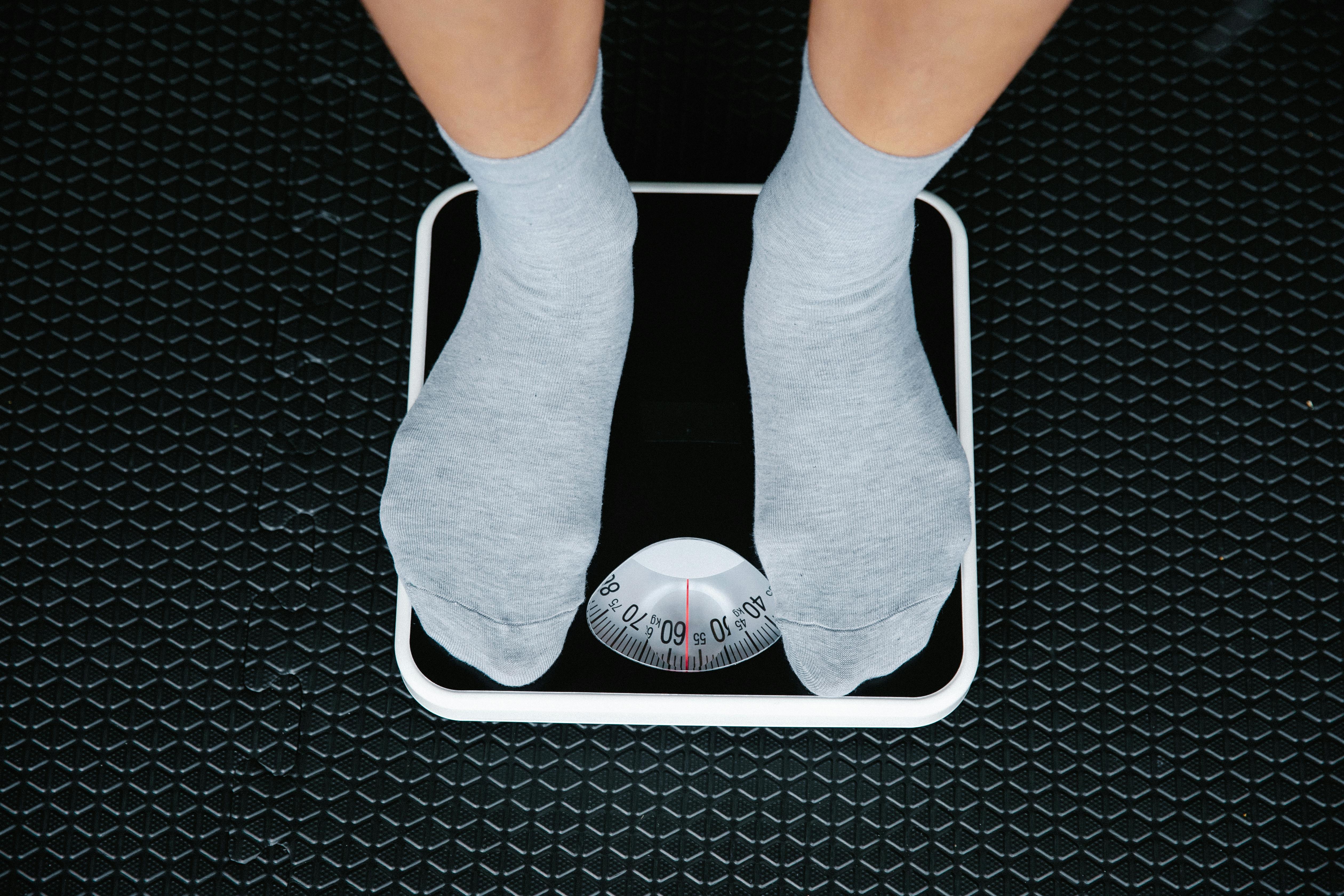
There is a story that gets told at endocrinology conferences in India. In 1995, Dr C.S. Yajnik — a physician at the KEM Hospital in Pune — stood next to his British colleague Dr John Yudkin and noticed something. Both men had the same BMI. But Dr Yajnik had nearly double the body fat percentage of Dr Yudkin. The paper they published about it — later called the YY Paradox — quietly changed how Indian doctors think about weight, metabolic risk, and who actually needs intervention.[1]
That story matters right now, in 2026, because semaglutide is suddenly affordable and accessible to millions of Indians. And the first question people are asking — am I eligible? — is being answered by online calculators, international guidelines, and GLP-1 eligibility tools that were not built for Indian bodies.
The short version: if you are Indian and your BMI is between 23 and 27, Western guidelines say you are fine. Indian clinical guidelines tell a more complicated, and more accurate, story.
What BMI actually measures — and what it doesn't
BMI is a ratio of weight to height squared. It was developed in the 19th century by a Belgian mathematician studying the "average man" — who was, by definition, European. It has been the global standard for classifying obesity ever since, despite decades of evidence that it performs poorly as a metabolic risk predictor across different ethnic groups.
The fundamental problem is that BMI measures weight but not fat distribution. Two people can have identical BMIs and dramatically different metabolic profiles — depending on where their fat sits and how much muscle they carry. For South Asians specifically, this discrepancy is not a marginal statistical quirk. It is a clinically meaningful difference that affects real health outcomes.
The thin-fat Indian phenotype — what the science shows

Indians carry a disproportionately high amount of visceral fat — the fat that accumulates around internal organs — relative to their total body weight. This pattern has been documented so consistently across Indian populations that it has its own clinical name: the thin-fat Indian phenotype, or normal weight obesity.[2]
The ESI Clinical Practice Guidelines — the definitive Indian guidelines for obesity management — describe it directly: South Asian ethnicity is characterised by significantly higher fat content despite an apparently smaller body frame. This has been shown in multiple Indian studies and validated in populations across Kerala, Mumbai, Chennai, and Delhi.[2]
What makes visceral fat clinically significant is its metabolic activity. Unlike subcutaneous fat — the fat under the skin — visceral fat releases inflammatory compounds and fatty acids directly into the portal circulation, driving insulin resistance, dyslipidaemia, and cardiovascular risk. An Indian person with a BMI of 24 may have the visceral fat burden of a Western person with a BMI of 28 or 29. The number on the scale does not reflect this. The BMI calculator does not either.
The ICMR-INDIAB national cross-sectional study documented that 43.3% of Indians are metabolically obese despite having a BMI that Western guidelines would classify as normal.[3] That is not a small statistical tail. That is nearly half the population being misclassified by a tool designed for a different ethnicity.
What the thresholds actually are
Here is the direct comparison between Western and Indian BMI thresholds — the numbers that determine whether you are classified as overweight or obese, and whether you are considered for pharmacotherapy:
| Classification | Western guideline BMI | Indian guideline BMI |
|---|---|---|
| Normal weight | 18.5 – 24.9 | 18.5 – 22.9 |
| Overweight | 25.0 – 29.9 | 23.0 – 24.9 |
| Obese | ≥ 30.0 | ≥ 25.0 |
| Pharmacotherapy threshold (no comorbidities) | BMI ≥ 30 | BMI ≥ 27 |
| Pharmacotherapy threshold (with comorbidities) | BMI ≥ 27 | BMI ≥ 25 |
These Indian thresholds are not invented by GLP-1 Check. They are the published recommendations of the Endocrine Society of India, the American Diabetes Association (for Asian populations), and the WHO Asia-Pacific regional guidelines.[2][4][5]
The practical implication is significant. Under Western guidelines, a BMI of 26 with no comorbidities does not qualify for pharmacotherapy. Under Indian guidelines, it does. A BMI of 25 with hypertension qualifies under Indian guidelines. It does not under Western ones.
The comorbidity factor — why it matters more for Indians
Indian guidelines place particular weight on comorbidities — not just BMI alone — because the thin-fat phenotype means metabolic disease often arrives before the BMI number would suggest it should. The ESI 2025 updated guidelines are explicit: pharmacotherapy should be considered in patients with a BMI of 25 or above when accompanied by at least one comorbidity such as hypertension, dyslipidaemia, type 2 diabetes, or obstructive sleep apnoea.[6]
This matters because these conditions are strikingly common in India at lower BMIs than in Western populations. The ICMR-INDIAB-17 study documented 101.3 million Indians living with diabetes — many of them at BMIs that Western guidelines would consider normal weight or merely overweight.[3]
So the question is not just what is your BMI? It is what is your BMI in the context of your waist circumference, your metabolic history, and the conditions your body is already managing?
Waist circumference — the number that BMI misses

Indian guidelines recommend waist circumference as a clinical measure alongside BMI, because it directly captures abdominal adiposity — the visceral fat that drives metabolic risk. The Indian cut-offs are:
- Men: waist circumference ≥ 90 cm indicates abdominal obesity
- Women: waist circumference ≥ 80 cm indicates abdominal obesity
Western guidelines use 102 cm for men and 88 cm for women. The Indian thresholds are meaningfully lower — reflecting the same underlying principle: Indians accumulate metabolically dangerous abdominal fat at smaller body sizes.
A person with a BMI of 24 and a waist circumference of 92 cm (men) or 82 cm (women) has measurable abdominal obesity by Indian clinical standards, even if a Western BMI calculator tells them they are normal weight. This is not a technicality. It is a clinically meaningful finding that their physician should be aware of.
What this means for semaglutide eligibility specifically
The STEP clinical trials that established semaglutide's efficacy enrolled participants meeting Western eligibility criteria — BMI ≥ 30, or ≥ 27 with comorbidities. The SELECT cardiovascular outcomes trial enrolled participants who were 84% white.[7] Indian patients were a small fraction of these trial populations.
This matters for two reasons. First, the clinical benefit of semaglutide — reducing cardiovascular risk, improving glycaemic control, reducing visceral fat — is likely to apply to Indian patients at lower BMI thresholds than Western trial data would suggest, precisely because Indian patients at BMI 25–27 may carry equivalent or greater metabolic burden to Western patients at BMI 30. Second, it means the eligibility thresholds for Indian patients should not be read directly from Western trial inclusion criteria.
Indian endocrinologists have been consistent on this point. The ESI, in both its 2022 guidelines and the 2025 update, recommends initiating GLP-1 pharmacotherapy at BMI ≥ 27 without comorbidities and at BMI ≥ 25 with at least one comorbidity — a full 3–5 BMI points lower than Western guidelines for equivalent clinical indications.[2][6]
A practical checklist for Indian patients
Based on Indian clinical guidelines, here is a more complete picture of the factors that determine GLP-1 eligibility for Indian patients — beyond the BMI number alone:
- BMI ≥ 27 — strong indication for pharmacotherapy consideration, with or without comorbidities
- BMI 25–27 with any of: T2D, hypertension, dyslipidaemia, sleep apnoea, PCOS, fatty liver — eligible under Indian guidelines
- BMI 23–25 with multiple comorbidities — discuss with your endocrinologist; clinical picture matters more than the number
- Waist circumference ≥ 90 cm (men) or ≥ 80 cm (women) — abdominal obesity by Indian standards, regardless of BMI
- HbA1c ≥ 5.7% (prediabetes) with elevated BMI — strong indication given Indian diabetes burden
If you use a Western BMI calculator and it tells you that you are normal weight or borderline overweight, and you have one or more of the conditions above — that calculator is not giving you the full clinical picture. It was not designed to.
A note on what doctors may not tell you
Many general practitioners in India still use Western BMI cut-offs — not because they are unaware of the Indian guidelines, but because Western thresholds are built into most clinical software, most health check report templates, and most routine screening protocols. The Indian guidelines exist and are well-evidenced, but they have not yet reached every consultation room.
This is not a criticism of Indian doctors. It is an observation about how clinical guidelines translate into practice — slowly, unevenly, and often only when a patient or a specialist raises the question directly. If you sit in a BMI grey zone — between 23 and 27 — and you have metabolic risk factors, it is worth specifically asking your doctor which guidelines they are applying and whether Indian-specific thresholds change the clinical picture.
GLP-1 Check's triage tool uses Indian clinical thresholds by design — not Western ones. If you have not taken the assessment, it is a free, anonymous 5-minute starting point for that conversation.
Key data points
- Indian guidelines classify overweight as BMI ≥ 23, obesity as BMI ≥ 25 — compared to ≥ 25 and ≥ 30 in Western guidelines[2]
- ESI recommends GLP-1 pharmacotherapy at BMI ≥ 27, or ≥ 25 with comorbidities[6]
- 43.3% of Indians are metabolically obese despite BMI in the Western-normal range[3]
- Indian abdominal obesity cut-offs: ≥ 90 cm (men), ≥ 80 cm (women) — vs 102 cm and 88 cm in Western guidelines[2]
- The SELECT trial that informed GLP-1 cardiovascular guidelines enrolled 84% white participants — South Asians were under 8%[7]
- The ADA recommends BMI ≥ 23 as the diabetes screening threshold for Asian populations[4]
References
- Yajnik CS, Yudkin JS. The YY Paradox. Lancet. 2004;363:163. The Lancet
- Endocrine Society of India. Clinical Practice Guidelines for the Evaluation and Management of Obesity in India. Indian Journal of Endocrinology and Metabolism. 2022. PMC
- Das AK, et al. Metabolic non-communicable disease health report of India: The ICMR-INDIAB national cross-sectional study (ICMR-INDIAB-17). Lancet Diabetes Endocrinol. 2023;11:474–489. PubMed
- Kalra S, et al. Defining and Diagnosing Obesity in India: A Call for Advocacy and Action. Journal of Obesity. 2023. PMC
- WHO Expert Consultation. Appropriate body-mass index for Asian populations and its implications for policy and intervention strategies. Lancet. 2004;363:157–163. PubMed
- Madhu SV, et al. ESI Clinical Practice Guidelines for the Evaluation and Management of Obesity in India — An Update (2025). Indian Journal of Endocrinology and Metabolism. 2025;29(4). PMC
- Lincoff AM, et al. Semaglutide and Cardiovascular Outcomes in Obesity without Diabetes (SELECT Trial). New England Journal of Medicine. 2023;389:2221–2232. PubMed
This article is for informational purposes only and does not constitute medical advice. BMI thresholds are one factor in a broader clinical assessment. Always consult a qualified physician or endocrinologist before starting any treatment. Semaglutide is a prescription drug in India and requires medical supervision.
Not sure if semaglutide is right for you?
Take our free 5-minute clinical assessment based on Indian guidelines.
Check My Eligibility →